How Can beer brewing equipment Be Customized for Your Brewery?
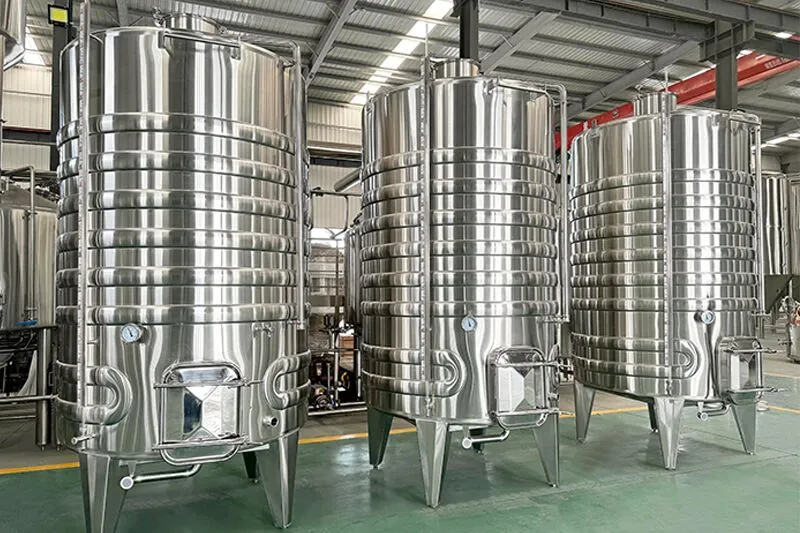
Beer brewing equipment can be customized around batch size, daily brew frequency, fermentation time, floor space, utilities, beer range, and packaging speed. A 10 hL brewhouse producing 2 batches per day needs a different cellar from a 20 hL system producing 4 batches. Fermenters may hold 1, 2, or 3 brewhouse turns, while heating can use steam or electricity and cooling can use independently controlled glycol zones. In 2026, specifications should also cover pressure ratings, sanitary piping, CIP routing, electrical standards, automation, and future tank positions. Good customization matches every vessel and utility to actual production volume rather than buying isolated equipment by size.
A brewery should start with finished-beer demand and work backward. A 20 hL brewhouse operated twice per day can make about 40 hL of wort before normal process losses, while 4 brews can approach 80 hL. If fermentation occupies a tank for 14 days, increasing brewhouse output without adding cellar capacity simply moves the waiting time from the brewhouse to the fermenters.
The same calculation changes when several brews fill one tank. Two 20 hL turns can feed a 40 hL fermenter, reducing the number of vessels, valves, temperature probes, and cleaning cycles compared with two separate 20 hL tanks. A brewery producing many seasonal beers may prefer smaller tanks because tying 40 or 60 hL to one recipe reduces scheduling flexibility.
A useful first specification normally includes:
-
brewhouse size: 5, 10, 20, 30, 50 hL or another required volume;
-
brews per 24 hours: 1, 2, 3, 4 or more;
-
typical fermentation and conditioning period: often measured in days or weeks;
-
annual operating days and planned packaged volume;
-
keg, can, bottle, or serving-tank requirements;
-
available electrical supply, steam, water, drainage, compressed air, CO₂ and glycol;
-
expected expansion during the next 3–5 years.
Once production numbers are fixed, vessel arrangement becomes easier to engineer. A two-vessel brewhouse saves floor area by combining operations, while separate mash, lauter, kettle and whirlpool vessels allow more process overlap. Four vessels do not automatically produce twice as much beer as two; output depends on mash time, lautering speed, wort boiling, whirlpool residence time, cleaning time and transfer sequencing.
A brewery planning 3 brews in an 8-hour shift should specify the required cycle time before fabrication. Adding another vessel only helps when it removes an actual scheduling restriction.
Heating should then be sized around the required temperature rise and local utilities. Electric elements are practical at smaller scales when the building has enough electrical capacity. Steam is common in larger installations because jacketed vessels can distribute heat over a broad surface, but boiler output, steam pressure, condensate return, piping size and local boiler regulations must be considered together.
Heat recovery can materially change utility sizing. Alfa Laval reports that one brewhouse heat-recovery arrangement can raise heating water from about 95°C to 99°C and reduce combined wort preheating and boiling steam consumption by around 10% compared with the referenced traditional arrangement. Actual savings depend on production schedule, incoming temperatures and equipment configuration.
Cooling therefore cannot be specified only from fermenter count. The refrigeration calculation should include hot wort cooling, fermentation heat, crash cooling, bright-beer cooling, ambient conditions, pipe losses and the number of vessels requesting cooling at the same time. A 10-tank cellar in which 6 tanks can be crash-cooled together needs a different chiller arrangement from the same 10 tanks cooled one at a time.
| Item | Custom specification example | Why it changes equipment size |
|---|---|---|
| Brewhouse | 20 hL, 3 brews/day | Sets daily wort volume |
| Fermenter | 40 hL working volume | Accepts two 20 hL turns |
| Cooling zones | Cone + 2 shell zones | Allows separate temperature control |
| Cellar | 8 × 40 hL tanks | Sets glycol and piping demand |
| Expansion | 4 future tank positions | Allows manifolds and utilities to be prepared early |
Tank geometry deserves the same attention. A 40 hL vessel can be made relatively tall and narrow or shorter and wider, within engineering limits. Ceiling height, doorway size, floor capacity, service clearance and transport access often determine which geometry is practical. A tank may fit its final position yet still be impossible to move through a 2.4 m entrance, so installation dimensions need to be checked before drawings are approved.
Fermentation vessels can also be customized with separate glycol jackets, dry-hop ports, sample valves, racking arms, pressure gauges, pressure/vacuum protection, carbonation connections, level instruments and cleaning devices. Cone angle and outlet design affect yeast collection and drainage, while insulation reduces heat transfer from the room into chilled beer.
Pressure requirements need formal engineering rather than a generic tank specification. ASME Section VIII covers many fired and unfired pressure vessels operating above 15 psig, although the exact code and certification requirements depend on vessel type and installation jurisdiction. European projects may instead involve the Pressure Equipment Directive 2014/68/EU and related conformity requirements.
That regulatory question should be settled before stainless thickness, reinforcement, manways and pressure fittings are finalized. Changing a vessel from atmospheric service to pressure-rated service after fabrication can require substantially more than replacing a relief valve.
Sanitary design then extends beyond the vessel itself. Product-contact piping should be arranged so beer, wort and cleaning solutions can drain without leaving unnecessary pockets. Valve type, pipe diameter, pump capacity, hose connections, sample points and instrument locations should match actual flow rates rather than simply copying another brewery’s layout.
Beer Brewing Equipment Manufacturers can also customize fixed piping, flexible hose stations, valve manifolds and transfer paths according to the building layout. For a compact brewpub, hoses may keep installation simple; for a brewery running several transfers every day, fixed sanitary piping can reduce manual reconnection and make routing more repeatable.
CIP capacity should be calculated at the same stage. A cleaning pump has to supply the required flow and pressure to tank spray devices while overcoming pipe and fitting resistance. A system may use separate caustic, acid, rinse-water or recovery vessels, while a smaller brewery may use a mobile unit and fewer circuits.
Cleaning design affects production hours. A vessel that takes 60 minutes to clean instead of 30 minutes loses another 30 minutes of availability every cycle; across 200 cleaning cycles per year, that difference reaches 100 operating hours.
Tank internals, weld condition and product-contact surfaces therefore matter as much as nominal volume. 304 stainless steel is widely used for brewery process equipment, while 316 or 316L may be specified where greater corrosion resistance is required. Material selection should account for chemistry, chloride exposure, cleaning agents and the operating environment rather than treating 316L as an automatic upgrade.
Automation can be customized in similar steps instead of purchasing a fully automated brewhouse from the start. A small plant may automate temperature control and variable-speed pumps while retaining manual valves. A larger plant may add flowmeters, level transmitters, automated valves, recipe steps, alarm records and PLC/HMI control.
One real brewery example shows how process hardware can alter timing. In a 2023 Alfa Laval case study, four 5,000 hL storage tanks at Carlsberg’s Fredericia brewery were converted for fermentation using an external heat exchanger and mixing system. Reported cooling time fell from 24–36 hours to about 12 hours, while time to diacetyl acceptance was reduced by 1–2 days depending on beer type.
Automation specifications should still reflect staffing and maintenance resources. Ten automated valves that remove frequent manual routing may be useful; 50 automated valves used only a few times per year add actuators, wiring, controls and spare-parts requirements. Recording temperature, pressure, flow and batch timing often produces more practical benefit than automating every manual operation.
Packaging capacity also has to match the cellar. A brewery producing 80 hL per day but packaging only 20 hL per shift will accumulate finished beer faster than it can be dispatched. Bright tanks, cold storage and packaging schedules then become part of the equipment calculation, not separate purchasing topics.
Cold-side temperature control remains important through transfer and packaging. The Brewers Association’s 2019 Draught Beer Quality Manual notes that many glycol-cooled dispensing systems are designed to operate with glycol bath temperatures between 28°F and 34°F, while the recommended faucet beer temperature cited in its troubleshooting table is 38°F. Brewery process cooling uses different design conditions, but the figures show how narrow temperature ranges can matter when beer approaches dispensing.
Expansion planning should be drawn into the first layout even when additional tanks will not be purchased in year one. A brewery starting with 6 fermenters may reserve another 4 positions, provide spare glycol manifold ports, increase pipe-header capacity, leave electrical cabinet space and locate floor drains where later vessels can use them.
The same approach applies to utilities. Installing a larger glycol header or providing unused valve connections during the first build can be less disruptive than cutting and rewelding an operating cellar 2 years later. The equipment supplier still needs to calculate whether pumps, chillers, boilers and electrical distribution should be oversized immediately or merely arranged so larger units can be added later.
Physical service access should be checked before fabrication drawings are released. Operators need space around pumps, valves, manways, dry-hop ports and instrumentation; technicians need room to remove motors, seals and heat-exchanger plates. Platforms and stairs also need enough clearance to let staff work without reaching across hot pipework or pressurized fittings.
Customization therefore works best from a written process specification containing batch volumes, daily turns, fermentation days, tank pressure, beer range, packaging rate, cleaning method, utility conditions, building measurements and a 3–5 year capacity plan. Equipment drawings can then be checked against measurable operating requirements instead of choosing tanks from a standard catalogue and adapting the brewery around them afterward.